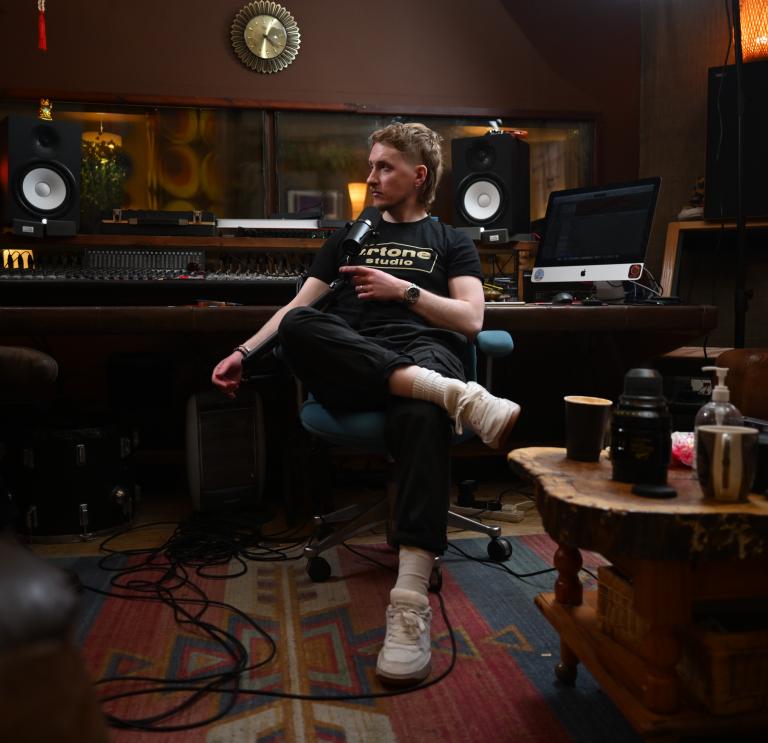
For many musicians, especially those working independently, getting their music played in film, television, games or adverts (known as sync or sync licensing) can be game-changing. It provides potential revenue and a chance to be heard beyond the usual routes of gigs and streams.
Skip Curtis, an artist and music supervisor from the Welsh Valleys, and Alun Llwyd, CEO of distribution service PYST, share insights into how sync works, how it’s evolving, and how Welsh and Wales-based artists can break into sync.
What is sync?
Sync – short for synchronisation – has shed its old sellout stigma. In an era of shrinking sales and low streaming income, a well-placed sync is now seen as both a creative opportunity and a financial lifeline.
In Wales, a strong TV and film sector and a growing games industry are creating new opportunities for musicians.
‘The old-fashioned attitude was that if you did syncs, you were selling out,’ says Skip. ‘But that’s when artists would make hundreds from music sales. Now, people are making pennies.’
‘Sync can help fund your next tour or album. It’s not easy to land, but there’s real opportunity in Wales, thanks to our strong creative sectors.’
If you want to boost your chances of landing a sync deal, read on for top tips from our experts.
Skip Curtis‘Sync can help fund your next tour or album. It’s not easy to land, but there’s real opportunity in Wales, thanks to our strong creative sectors.’
How Wales is building a sync-friendly music industry
Skip’s band XY&O landed sync deals with The Sims and Netflix’s Maid, which opened his eyes to how the process works. That experience, along with direct support from us, inspired him to launch Sinc Cymru – a sync-focused project connecting Welsh artists and rights holders with the global screen industry.
‘Without support from Creative Wales, this wouldn’t have happened. Wales has amazing talent, and music is part of our cultural identity – but the industry infrastructure has fallen behind,’ says Skip. With our backing, Skip is working to rebuild that.
Alun Llwyd is also working on that infrastructure. He launched PYST in 2018 to provide in-house digital distribution and label services for Welsh music.
‘Most labels had to pay to access distribution systems, which were usually London-based,’ says Alun. ‘We felt there was a need to establish something in Wales that could keep income local.’
Now working with 75+ labels, PYST returned over £100,000 in streaming income last year – money that was reinvested into strengthening the Welsh music ecosystem. They’ve also stepped into sync.
‘Our media and industry database includes full details and WAVS for new releases, which we send to music supervisors and people in film, TV and gaming,’ says Alun.
‘We also use Orchard to service the wider global film, TV and gaming worlds, and compile a monthly update of new tracks and details for Creative Wales to share with their network.’
This growing ecosystem is connecting artists, labels, publishers and supervisors. But both Alun and Skip agree: more support is needed for Wales to compete on a global scale.
‘You have artists who make the music. And you have people in TV and film who need great music in their productions. But we need more of the middle ground – the people who know how to make those connections and deals happen,’ says Skip.
While the industry continues to grow, there are practical steps artists can take right now. Here’s some advice from Skip and Alun to help you get your music synced.
Alun Llwyd‘Most labels had to pay to access distribution systems, which were usually London-based,’ says Alun. ‘We felt there was a need to establish something in Wales that could keep income local.’
Five expert tips to get your music synced
Want to boost your chances of landing a sync deal? Here are five essential tips from the experts:
- Register your music with PRS (or equivalent). Whether it’s PRS (UK), ASCAP or BMI (US), make sure every track is properly registered to collect royalties from syncs, live performances and broadcasts.
- Always have high-quality instrumental versions. Music with vocals doesn’t always fit under dialogue or narration. Keep high-quality instrumental versions and stems on file.
- Get your metadata right. Mood, genre, tempo, lyrics, and rights holders should all be embedded and accurate. Bad metadata = missed chances.
- Use imagery in your lyrics. Songs with vivid emotional cues are more syncable. But don’t force it – quality songwriting always wins.
- Keep making and releasing music. Finally, ‘sync is a lottery’, says Alun. The more quality music you have out there, the better your chances of discovery.
PYST has been supported by our partnership funding. If you would like to find out more about this support, please click here or contact us via creativewales@gov.wales.
Want to keep up to date with the latest sync news and music industry insights? Follow Skip Curtis, PYST , and Creative Wales on Instagram.